








You never forget your first spin on the pole. What comes after is a mix of strength, expression, and the feeling of creating things with your body that you previously thought impossible. Pole dance training is more than fitness — it changes how you move, how you feel, and how you see yourself.
Whether you're looking to learn pole dance, start in a studio, or seek an advanced training plan — here you'll find everything you need for your training. From exercises without a pole to flexibility routines and the right equipment.
The most important things in brief
- Pole dance trains the entire body — strength, flexibility, coordination, and expression simultaneously
- A training plan with 3–4 sessions per week yields the best progress
- Learning pole dance yourself is possible with a secure pole at home plus occasional studio feedback
- Strength training without a pole (push-ups, planks, pull-ups) specifically prepares you for tricks
- Progress depends not only on training but also on nutrition and recovery
- Short shorts and tight-fitting tops with skin contact are essential for grip on the pole
What is pole dance training and why is it worth it?
Pole dance training combines strength, flexibility, and endurance with artistic expression. You work with your entire body weight on a vertical pole, developing upper body strength, core stability, and body control that will also support you in everyday life. What many underestimate: Pole dance fitness is a full-body workout that challenges arms, back, legs, and core simultaneously — more intensely than most classic fitness programs.
At the same time, pole dance is a community experience. The mutual support in the studio, the shared celebration of progress, and the creative freedom make this sport so special. Many start with a class in their city, others prefer training at home — both work, as long as you stick with it.
Learning pole dance: studio, home or online
Pole Dance Training in the Studio
A studio offers professional guidance, secure poles, and the community feeling that makes pole dance so unique. Especially as a beginner, you benefit enormously from direct feedback from an instructor — correcting posture mistakes, improving technique, and gaining confidence with new moves are things that are difficult to learn alone. Pole fitness classes are available in almost every major city, from beginner to advanced.
Learning pole dance yourself: at home and online
Do you want to learn pole dance yourself? With the right pole and a structured training plan, it's definitely possible. An online course gives you the flexibility to train at your own pace and repeat exercises as often as you like. Important: For this, you need a secure pole — in our guide to buying a pole dance pole, you'll find everything about purchasing, installation, and safety.
Combine studio classes for new moves and technique feedback with home training for repetition and strength building. This way, you get the best of both worlds.

Pole Dance Training Plan for Beginners and Advanced
A structured training plan is the key to real progress in pole dance training. Consistency beats intensity — rather 3–4 shorter sessions per week than one mammoth session on the weekend. Your body needs time to recover between sessions, especially your hands and forearms.
Example: Weekly Plan (3–4x per week)
Day 1 — Pole Basics and Core (45–60 minutes): Warm-up with shoulder circles and wrist mobilization, then practice basic moves on the pole. The last 15 minutes are dedicated to core training: planks, leg raises, and hanging knee tucks build the core stability you need for inversions.
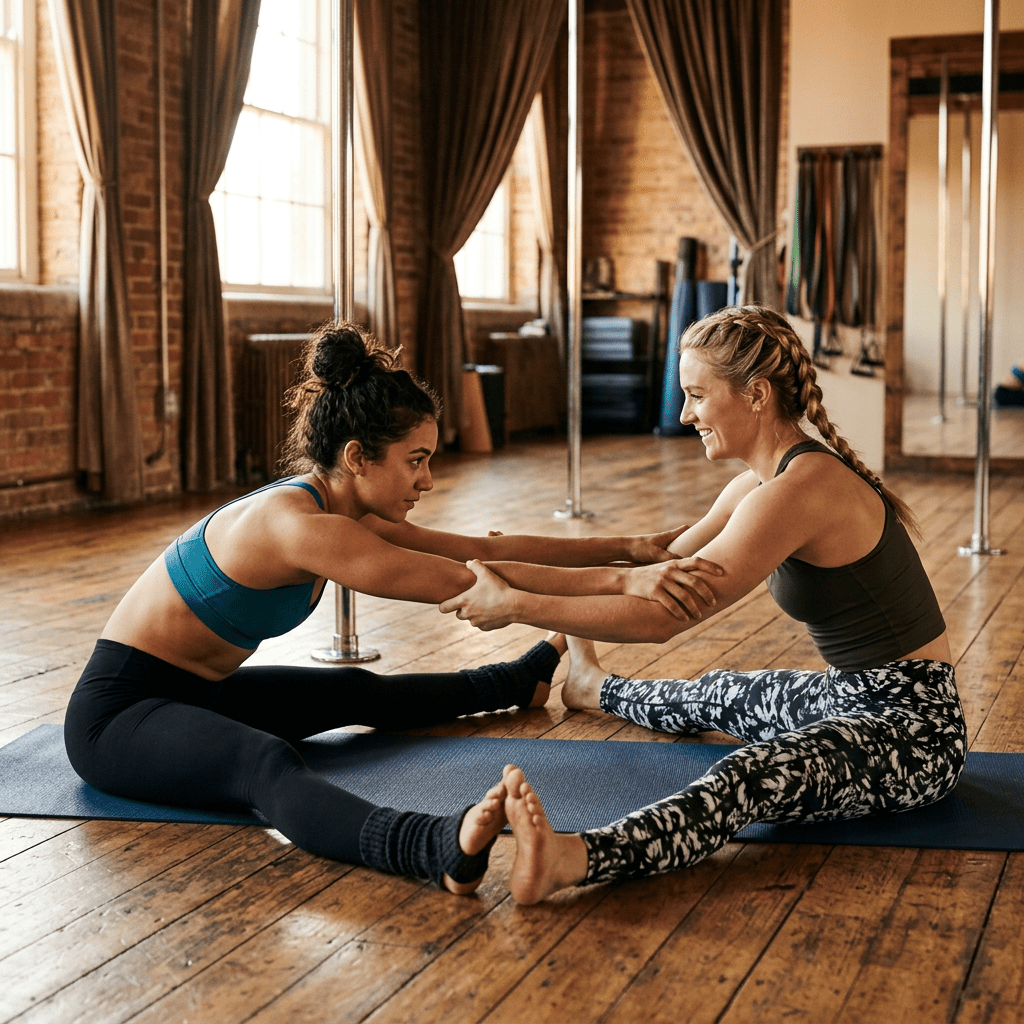
Day 2 — Flexibility and Exercises (60 minutes): Start with 30 minutes of targeted flexibility training — hip openers for split preparation, shoulder stretches for backbends, and hamstring stretches for pike positions. Afterwards, 30 minutes of pole exercises focusing on flowing transitions between moves.
Day 3 — Tricks and Strength (60 minutes): This day is for challenging moves. Strength training and trick work alternate — try new moves, work on clean execution. Resistance bands are a good addition here to specifically strengthen the muscle groups you need for certain tricks.
Day 4 — Choreography and Flow (optional, 45 minutes): Here, you combine everything into a workout that brings together moves, transitions, and floorwork into a choreography. This day is less intense and more creative — perfect as active recovery.
Ready to take your training to the next level?
Clothing with maximum grip and perfect fit — designed by a dancer for dancers.
To the collectionPole Dance Exercises without a Pole
No pole at home? No problem. There are effective exercises that specifically prepare you for pole training and build exactly the strength and flexibility you need for moves, climbs, and spins.
Strength Training without a Pole
Push-ups strengthen chest, shoulders, and triceps — the foundation for every push-away and climb. Start with knee push-ups and work your way up to full ones. Planks build the core stability you need for holds and inversions — hold for 30 seconds and increase to 60. Pull-ups are the ultimate discipline: if you can do three clean pull-ups, you have enough strength for most beginner moves on the pole.
Lying leg raises train the lower abdominal muscles for inversions and leg hooks. Resistance band training is another good addition: it specifically trains shoulder blade stability and rotator cuff — muscle groups that are extremely stressed on the pole but are often neglected in regular strength training.
Combine these exercises 2–3 times a week with your regular training, and you'll notice how much easier new moves become. Supplement strength training with daily stretching — especially splits, bridges, and shoulder opening make the biggest long-term difference.

Why progress is more than training
You train hard, but progress is slow? Often, it's not due to the training itself. Without adjusted nutrition and conscious recovery, your body lacks the energy to build muscle and master complex moves. Your muscles don't grow during training, but in the recovery phase afterward — and for that, they need the right building blocks.
- Sufficient protein for muscle building, which occurs during training
- Carbohydrates as an energy source for intense sessions and stretching
- At least seven hours of sleep — otherwise, you demonstrably build strength more slowly
- Daily stretching, even on rest days, ideally after a short warm-up
“Progress on the pole begins with the right basics — structure, adjusted nutrition, and professional guidance make all the difference." Angie is a coach for nutrition & training in pole dance. Find out more at Angie's Coaching.
What to wear for pole dance training?
The answer is simple: as little as necessary, as comfortable as possible. Direct skin contact with the pole is your most important grip. Loose clothing slips, smooth fabrics offer no hold, and long pants take away contact surface on your legs.
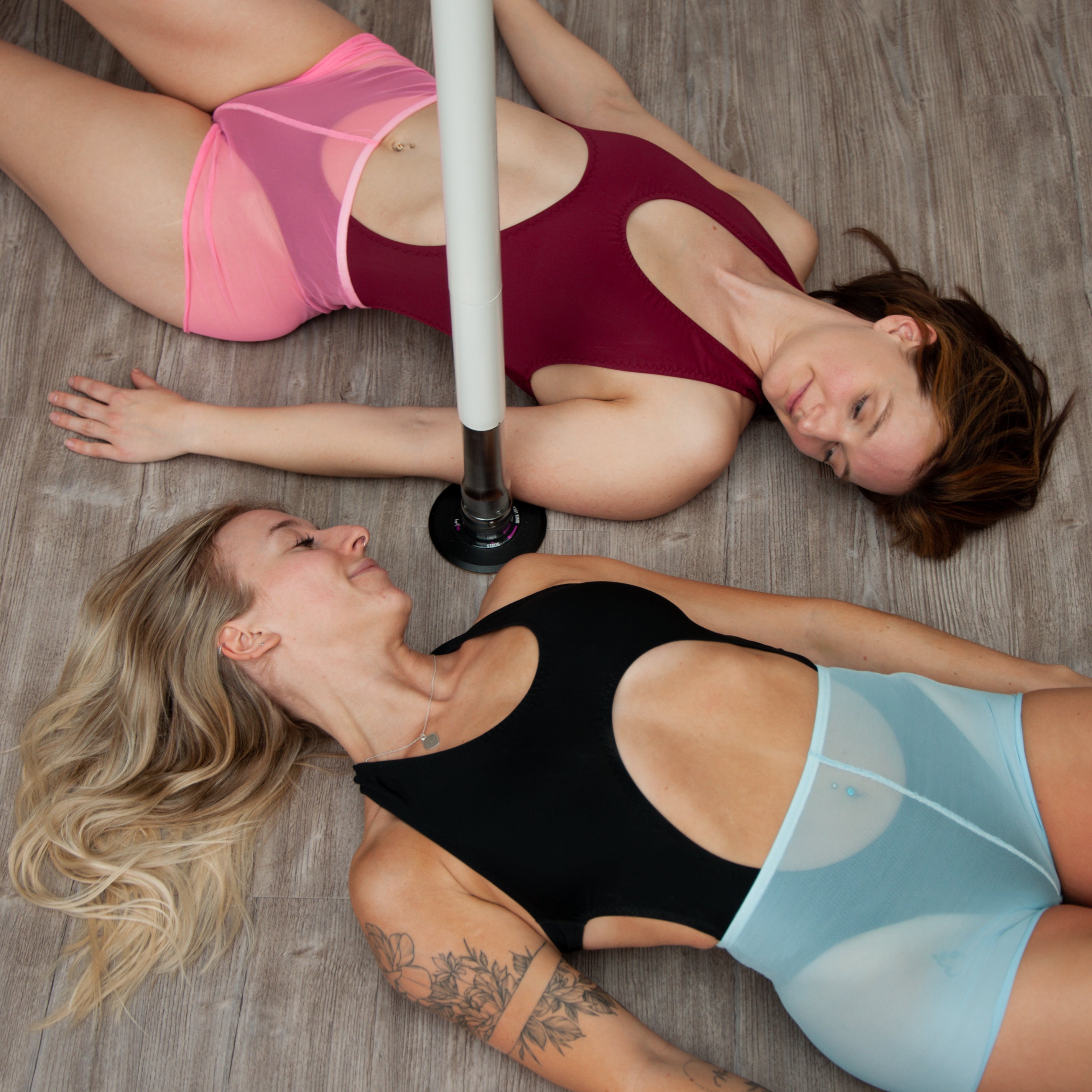
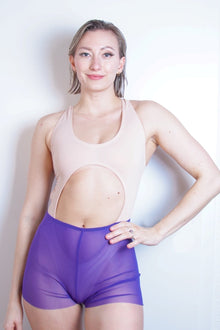
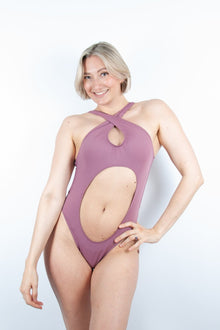
The ideal training outfit consists of short shorts and a tight-fitting top. The shorts should expose the thighs — this is the main grip surface for climbs, sits, and leg hooks. For those who want more coverage, high-waist shorts are a good option. For complete outfits, bodysuits are a good choice: a single piece that stays in place, doesn't slip, and still allows skin contact in the right areas.
For floorwork and knee moves, knee pads are essential. And for getting to and from the studio, comfortable cropped hoodies for before and after training are worthwhile — they keep you warm without restricting movement during warm-up or cool-down.
The right gym bag for the studio
Besides appropriate clothing, a small sturdy gym bag is useful for the studio. It should contain grip aid for sweaty hands, a change of clothes for after training, a water bottle, and a towel for the mat. Anyone who keeps everything at hand in a practical bag for the studio will arrive at training more relaxed and be on their way faster after the last exercise.
FAQ on Pole Dance Training
How do you learn pole dance?
Ideally, with a combination of studio classes and home training. In the studio, you get direct feedback on technique and safety for new moves; at home, you repeat and consolidate what you've learned. If you want to learn pole dance entirely by yourself, you need a secure pole and, ideally, a structured online course.
What are the benefits of pole dance?
Pole dance trains strength, flexibility, coordination, and body control simultaneously — a true full-body workout that challenges arms, back, legs, and core. Additionally, there's expression and a sense of community: many find the sport a mix of fitness and creative self-expression that classic workouts don't offer.
How often should one train pole dance?
For beginners, 2–3 sessions per week are sufficient to build strength and learn technique. Advanced dancers optimally train 3–4 times a week with a mix of pole training, strength building, and flexibility training. At least one rest day between intensive sessions is important for recovery.
Conclusion: Starting Your Pole Dance Training
- Start in the studio for safe technique and community — supplement with home training
- 3–4 sessions per week with a mix of pole, strength, and flexibility yield the best results
- Exercises without a pole (push-ups, planks, pull-ups) specifically prepare you for pole moves
- Nutrition and recovery are just as important as the training itself
- Short shorts + tight-fitting top = maximum grip on the pole
The strength you build on the pole, you feel in everything you do — on and off the pole.
"Progress doesn't happen in one perfect day, but in the sum of the sessions you simply pushed through."