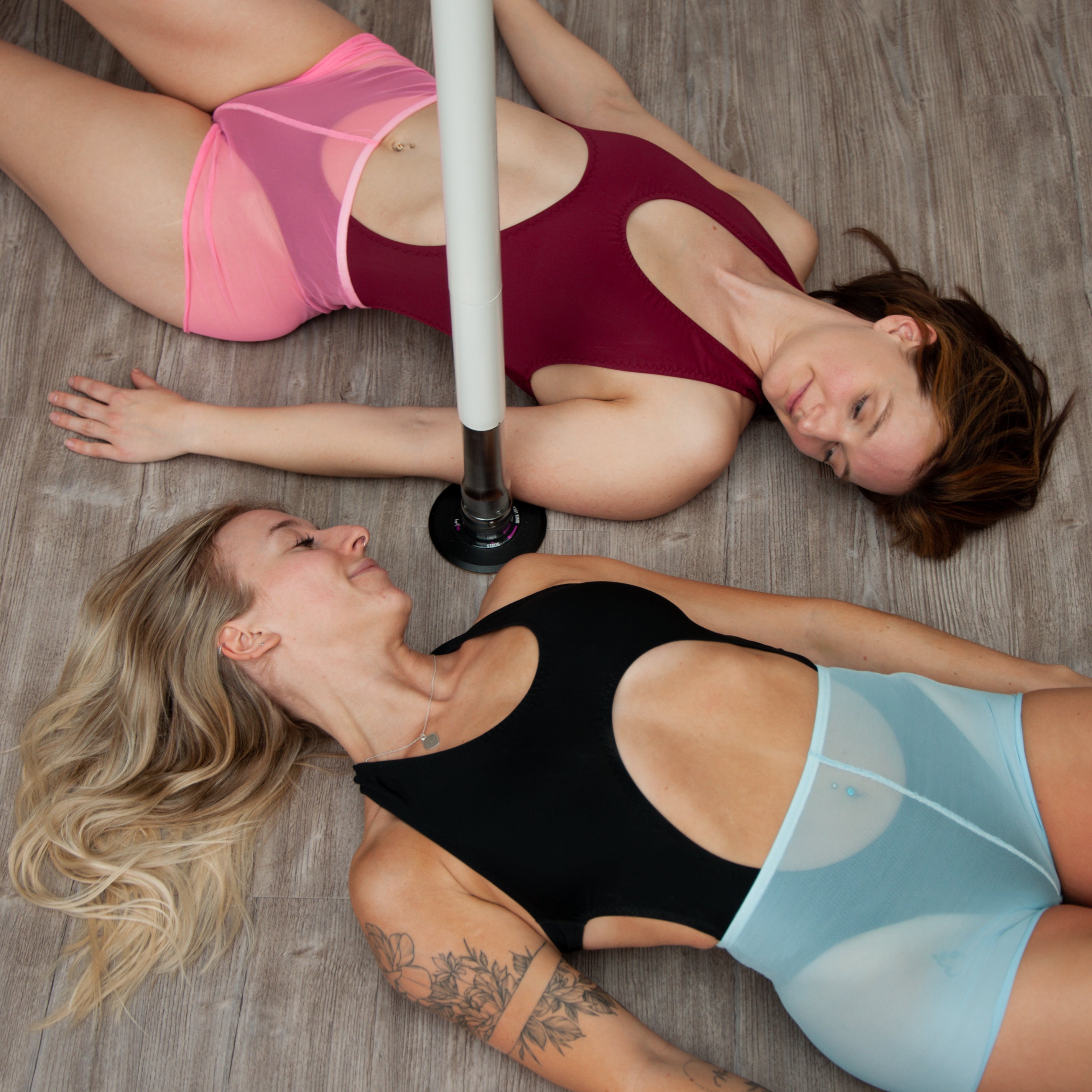


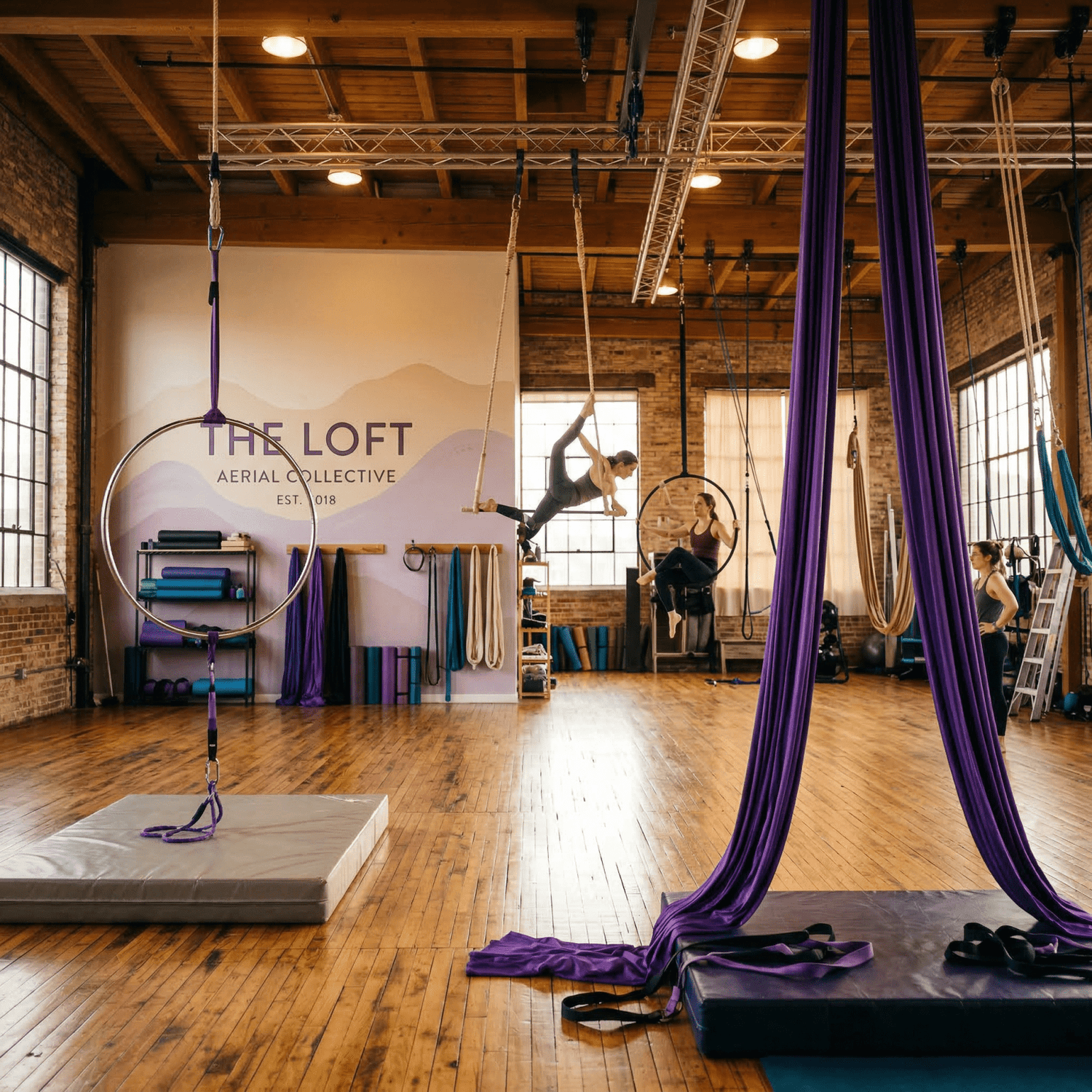

Someone is hanging upside down in a fabric, looking as if gravity is negotiable. That's aerial acrobatics — and it's more accessible than the initial images suggest.
This guide shows you what disciplines exist, how you can learn aerial acrobatics, what equipment you need, and what constitutes the right clothing — whether you're just considering getting started or planning your own rig for home.
The Essentials in Brief
- Aerial acrobatics includes all artistic aerial disciplines: aerial silk, aerial hoop, trapeze, aerial straps, aerial rope
- Start with a studio course — no circus experience necessary
- Special courses are also available for children, usually from around 6–8 years old and always with instruction
- Equipment for home: freestanding rigs from approximately €300, ceiling mounts from approximately €100
- Never train without a load-bearing concrete ceiling or certified rig
- Clothing: tight-fitting, no zippers, skin contact in the right places

Table of Contents
- What is Aerial Acrobatics? Origin and Classification
- Aerial Acrobatics Disciplines Compared
- Learning Aerial Acrobatics: Getting Started and Courses
- Aerial Acrobatics for Children
- Aerial Acrobatics Equipment: Frame, Rig, and Accessories
- Aerial Acrobatics Clothing and Costume
- FAQ about Aerial Acrobatics
What is Aerial Acrobatics? Origin and Classification
Aerial acrobatics — also called aerial arts — describes all artistic disciplines performed in the air on various apparatus. What used to be reserved for the circus is now an independent aerial sport that combines strength, flexibility, and artistic expression. As aerial fitness or aerial dance, the discipline has increasingly gained recognition as a popular sport in recent years — in studios, gyms, and with suitable equipment, also at home. Originally almost exclusively taught in circus schools, it has developed into its own leisure and fitness scene over the last 10 to 15 years, with specialized studios now in practically every major city.
The appeal lies in the combination of visible strength and aesthetic movement. Unlike pure strength training, hanging, climbing, and wrapping not only challenge individual muscle groups but also core tension, coordination, and flexibility simultaneously. Many beginners also report a mental effect: once you're in the air, there's no room for everyday thoughts — full concentration is on the next movement.
Aerial Acrobatics Disciplines Compared
An overview of the four most accessible disciplines of aerial acrobatics — from beginner-friendly to strength-intensive:
For advanced practitioners, there are also Aerial Straps (two fabric straps, very arm-strength intensive, similar to ring gymnastics) and Aerial Rope (a single rope, which requires more grip strength than the silk because there is less material to wrap around) — both more suitable if you already have basic strength from silk or hoop.
Which discipline suits you best depends less on your current fitness and more on what appeals to you. Do you want flowing, dance-like movements? Then aerial silk or aerial yoga is the more obvious entry point. Are you more drawn to the combination of a solid frame and dynamic poses? Then try aerial hoop. Many studios let you try out several apparatus in a trial lesson before you commit — use this instead of deciding online beforehand what "looks best." Ultimately, what matters is how an apparatus feels to you, not how it looks in photos.
The right clothing for your aerial training
Maximum grip, perfect fit — developed by a dancer for dancers.
To the collectionLearning Aerial Acrobatics: Getting Started and Courses
Do you want to learn aerial acrobatics and don't know where to start? The honest answer: in a studio, with a course. Online tutorials give you an impression, but you'll only learn the basic techniques — safe climbing, correct wrapping, controlled descent — under professional guidance. Good studios offer trial courses for adults and provide equipment, so you don't need to bring anything but sportswear.
Fundamentally, aerial acrobatics is accessible to everyone. You don't need a circus background, a split, or pull-up strength to start — you build strength and flexibility during training. Most courses begin with aerial silk or aerial hoop because both are beginner-friendly and allow for simple poses to be achieved in the first few sessions. What many underestimate: hands and forearms need time to get used to the strain at the beginning. Two sessions per week are ideal for getting started; more would be too much strain for skin and grip muscles initially.
A typical trial lesson usually lasts 60 to 90 minutes and begins with a general warm-up that specifically activates shoulders, core, and grip strength. This is followed by the basic technique on the chosen apparatus — for aerial silk, for example, safe entry and first climbing techniques, for aerial hoop, controlled entry and exit. To conclude, you usually practice a simple pose that you can have photographed — a small but important motivational boost for many beginners. Typically, you only need to bring tight-fitting sportswear without zippers and, if available, wrist wraps.
Look for a studio that offers multiple disciplines. This way, you can try out whether silk, hoop, or trapeze suits you best before specializing in one direction.
Aerial Acrobatics for Children
Aerial acrobatics is also becoming increasingly popular for children. Many studios now offer children's and youth courses, usually from around six to eight years old — the exact starting age depends on the studio and the child's developmental stage. The focus is almost always on aerial silk (also advertised as aerial acrobatics fabric children's course) and aerial hoop, as both disciplines can be built up in small steps and quickly lead to initial successes.
For children, aerial acrobatics brings more than just fun hanging: the training promotes coordination, body awareness, and core strength — similar to gymnastics, but with the added appeal of height. Many parents also report a noticeable effect on self-confidence when children master a new pose. The correct progression always remains important: a good children's studio builds up difficulty levels slowly and never pushes for poses for which strength or courage are still lacking.
- Trained instructors with experience in children's and youth training
- Sufficient fall protection and mats under the training area
- Small group sizes for individual supervision
- No unsupervised training on private frames or rigs
For home use, the rule for children is even stricter than for adults: aerial acrobatics equipment should only be used under expert supervision, never as a free play device.
Aerial Acrobatics Equipment: Frame, Rig, and Accessories
If you want to train at home, you need a secure suspension. There are two options for this: ceiling mounting or a freestanding frame. Before you hang anything, it must be clear: the ceiling must be a concrete ceiling and be able to support at least 300 kg of dynamic load. Plasterboard, wooden beam ceilings without reinforcement, and suspended ceilings are taboo. If you are unsure, have a structural engineer check it.
A freestanding aerial acrobatics rig solves the ceiling problem completely — it stands on its own legs and does not require attachment to the ceiling. Good frames cost from approx. €300 for simple models and up to €1,500+ for professional outdoor variants. The height should be at least 3 meters, for aerial silk rather 4 meters. Building a frame yourself is often discussed online, but is strongly discouraged: self-built constructions generally do not pass the stress tests required for dynamic movements. Safety comes before frugality.
In addition to the apparatus itself, accessories include: carabiners (minimum load 25 kN), a swivel for rotating apparatus, crash mats for fall protection, and grip aid for sweaty hands. When purchasing, it is worthwhile to opt for certified equipment — DIY store solutions are a safety risk here.
Whether ceiling mount or freestanding frame: regular inspection is mandatory, not optional. Check carabiners, screws, and seams at least every few months for wear, rust, or material fatigue — especially after intensive use. The fabric or hoop itself also needs attention: tears in the fabric or dents in the metal are a clear signal to replace the equipment rather than risk it. If you buy a used rig, ask for the complete usage history and all available load certificates.
Not everyone needs their own rig immediately. If you are still unsure whether aerial acrobatics is right for you in the long term, you can rent training time in many studios outside of class hours — this saves the initial investment until it is clear which setup really suits you.
Aerial acrobatics equipment must be certified for dynamic loads. Static load capacity is not enough — during training, forces momentarily occur that are many times your body weight. No DIY for suspension.

Aerial Acrobatics Clothing and Costume
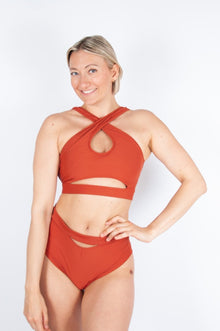
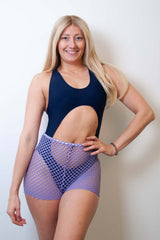
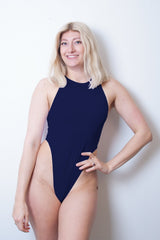
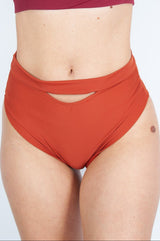
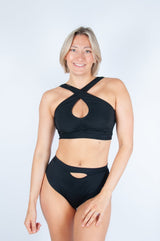
The right aerial acrobatics clothing is just as important as the equipment itself. Basic rule: tight-fitting, no loose parts, no zippers or buckles that can get caught in the fabric, rope, or hoop. Depending on the discipline, you need skin contact in different places — for aerial silk, especially in the armpits and knee pits, for aerial hoop, on the hips and thighs.
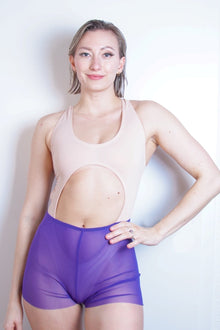
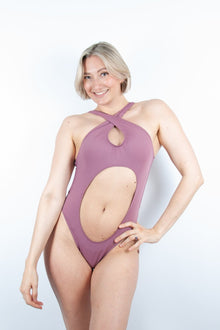
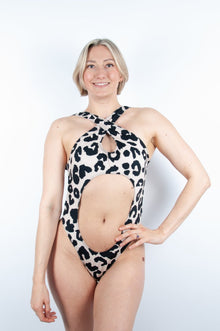
For beginners, leggings and a tight-fitting top are sufficient. For advanced training, short shorts and tops with strategic skin contact are better because you get more grip on the apparatus. Bodysuits are the most versatile option — they combine coverage with skin contact in the right places and don't slip when inverting.
For materials, a tight, elastic mix of polyester and elastane has become established in aerial acrobatics: close-fitting, quick-drying, shape-retaining even during intense movements. Pure cotton, on the other hand, is hardly suitable — it stretches, soaks up sweat, and offers too little grip on the apparatus.
A costume for performances and shows follows different rules than training clothing: here, optics count at least as much as function, as long as nothing gets snagged. Lou's aerial acrobatics clothing is developed for the demands of silk, hoop, and trapeze: grip where you need it, freedom of movement where it counts.
Clothing for every Aerial Discipline
Grip, fit, freedom of movement — developed in the studio, made for your flow.
Discover outfitsFAQ about Aerial Acrobatics
What is aerial acrobatics?
Aerial acrobatics — also known as aerial arts — encompasses all artistic disciplines performed in the air on various apparatus. These include aerial silk, trapeze, aerial hoop, aerial straps, and aerial rope. Its roots are in the circus, but today aerial acrobatics is taught worldwide in specialized studios as a sport and art form — for adults as well as in dedicated children's courses.
Conclusion: Your Introduction to Aerial Acrobatics
- Aerial acrobatics includes aerial silk, aerial hoop, trapeze, straps, rope, and more
- Start with a studio course — also for children from approx. 6–8 years, always under supervision
- Training at home: ceiling mounting only for concrete, otherwise a freestanding rig
- No DIY for rigs and suspensions — only certified equipment
- Clothing: tight, no loose parts, skin contact for grip depending on the discipline
No matter which discipline you choose — the first step is the same: a course, a studio, and the willingness to push yourself a little beyond your limits.
"The air is for everyone — you just have to get up there."