


You want to buy a pole dance pole and don't know where to start? Understandable — between freestanding systems, tension poles, and permanently mounted poles, it's easy to lose track. Then there's the question of plasterboard ceilings, ceiling height, and the right size.
Here you'll find everything you need: which pole dance pole suits your home, how to set it up safely, how much it should cost, and what clothing you need for training.
Key takeaways
- There are three systems: freestanding (mobile), tension system (no drilling), and permanently mounted (screwed)
- Tension systems are the most popular choice — but only for concrete ceilings, not for plasterboard
- Standard diameter is 45 mm, load capacity at least 120 kg, preferably 150 kg
- A good pole dance pole costs between €200–€600 depending on the system
- You need at least 2x2 meters of free space and a ceiling height of 2.40 m
- Tight-fitting clothing with skin contact is essential for grip on the pole
Table of Contents
Pole dance poles compared: Which system is right for you?
If you want to buy a pole dance pole, you have three basic systems to choose from. The right choice depends on whether you rent, what your ceiling is made of, and how intensely you want to train. Here's an honest comparison.
Freestanding pole dance pole (mobile)
A freestanding pole dance pole — also called a mobile pole dance pole — stands on a stable base and requires neither a ceiling nor drilling. This makes it the most flexible solution: you can set it up in different rooms, take it out to the terrace in summer, and easily move it when you relocate. For beginners who want to try out pole dance, a mobile pole dance pole is ideal.
The disadvantage: freestanding systems are less stable than permanently mounted poles. The base can easily tip over with dynamic tricks and spins. Good mobile systems cost between €300–€600 — more expensive than tension systems, but with zero installation effort.

Tension system: Pole dance pole without drilling
The tension system is the most popular choice for a pole dance pole at home. The pole is tensioned between the floor and the ceiling — completely without drilling, without holes, without marks. Perfect for rented apartments. The principle works like an oversized telescopic rod: you extend the pole to the ceiling and tension it firmly with a screw mechanism.
Important: Tension systems only work with load-bearing concrete ceilings. This system is taboo for plasterboard — more on that in a moment. Good tension systems cost between €200–€400 and offer sufficient stability for beginners and advanced users if installed correctly.
Permanently mounted pole (screwed)
The permanently screwed strip pole offers maximum stability and is the first choice for intensive training with dynamic tricks, drops, and spins. By being screwed into the ceiling and floor, it withstands stresses that tension systems cannot handle. A pole dance pole for home in this variant is particularly suitable for a dedicated training room or if you own property.
Installation requires drilling holes — that's the trade-off. Cost: from €250 for the pole plus any craftsman costs for installation.
High-quality poles offer both modes: static (fixed) for learning tricks and spinning (rotatable) for flowing choreographies. A pole dance pole that spins makes training more versatile — but for learning, you start in static mode.
The right clothing for your pole training
Maximum grip. Perfect fit. Developed by dancers for dancers.
To the collection →Buying a pole dance pole: Material, diameter, and cost
If you want to buy a pole dance pole, three factors determine the quality: material, diameter, and load capacity. Plus the question everyone asks: how much does a pole dance pole cost anyway?
Material and grip
Most pole dancing poles are made of stainless steel or chrome. Stainless steel offers better grip with skin contact and is the better choice for beginners. Chrome is smoother and is mainly preferred in advanced spinning. Brass poles warm up slightly on skin contact, offering the best grip — but are also the most expensive. Regardless of the material: the surface must be smooth and free of weld seams.
Diameter and load capacity
Standard diameters for a pole dance pole are 45 mm — this fits most hand sizes. Smaller hands are better with 40 mm. The load capacity should be at least 120 kg, preferably 150 kg, because dynamic forces occur during training that significantly exceed your body weight.
Look for TÜV or CE certification. Cheap no-name poles can fail under load. A pole dance pole test in a trade magazine or community reviews can help you choose.
What does a pole dance pole cost?
Prices vary depending on the system and quality. Freestanding systems cost €300–€600, tension systems €200–€400, and permanently mounted poles from €250 plus installation. Buying a used pole dance pole can be worthwhile — but check the condition, brand, and whether all parts are present. Known brands provide spare parts and extensions, which is often not the case with no-name products.

Pole dance pole and plasterboard ceiling: What you need to know
The most common question: Can I mount a pole dance pole on a plasterboard ceiling? The clear answer: a tension system directly against plasterboard is dangerous and should not be done.
Plasterboard can withstand a maximum of 30–50 kg static load. Pole dancing involves dynamic forces up to 150 kg — and even more for tricks like inverts or spins. A plasterboard ceiling can break, and the risk of injury is enormous. If your ceiling is made of plasterboard, you have two safe options.
Option 1: Freestanding pole
A freestanding pole dance pole does not require the ceiling. The mobile system stands stably on the floor and works independently of the ceiling material — whether plasterboard, wooden beams, or concrete ceiling makes no difference.
Option 2: Through-fastening to the concrete
Have a specialist check whether there is a concrete ceiling or wooden beams behind the plasterboard. With special through-holes drilled through the plasterboard to the load-bearing material behind it, a pole dance pole can also be safely mounted in plasterboard apartments. This costs extra, but gives you the stability of a permanently mounted pole.
I started training in a rented apartment with a plasterboard ceiling and used a freestanding pole. No stress with the landlord, absolutely safe, and I could set it up in different rooms. Today I train in the studio, but I still use the mobile pole for warm-ups at home.
Setting up, installing, and securing a pole dance pole
Correct installation is crucial for your safety. How you can set up and install your pole dance pole depends on the system.
Setting up a tension system
When setting up a tension pole, first mark the position in the center of the room — at least 1.5 meters away from any wall. Then set up the pole, extend it telescopically to the ceiling, and tighten the mechanism firmly. Check the tension after each session! A pole dance pole without drilling must be re-tightened regularly, as the tension can loosen due to vibrations during training.
Securing a permanently mounted pole
For a permanently screwed pole, drill holes in the ceiling and floor, insert heavy-duty anchors, and screw on the brackets. If in doubt, hire a professional — an incorrectly secured pole dance pole is life-threatening. Dismantling a permanently mounted pole dance pole leaves drill holes that you will have to spackle when you move out.
Room planning: How much space does a pole dance pole need?
How much space for a pole dance pole? As a minimum, you need 2x2 meters of clear space around the pole — preferably 2.5x2.5 meters for advanced tricks. The ceiling height should be at least 2.40 meters, ideally 2.60 meters or more. The floor must be even and non-slip, and there should be no furniture or obstacles in the vicinity. A pole dance pole in the room only works if you have enough space — if in doubt, rather in the living room than in the bedroom.
The right clothing and equipment for training
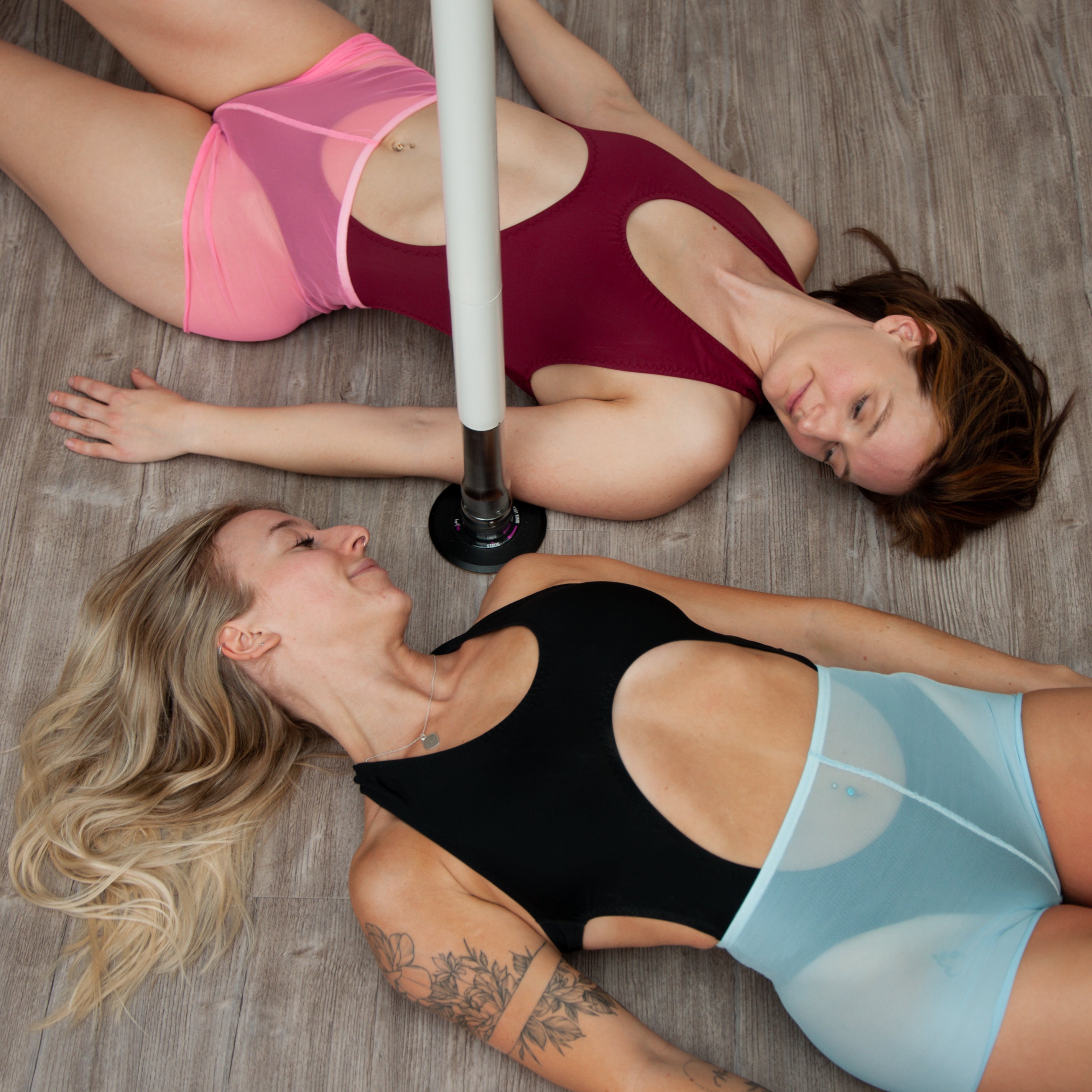
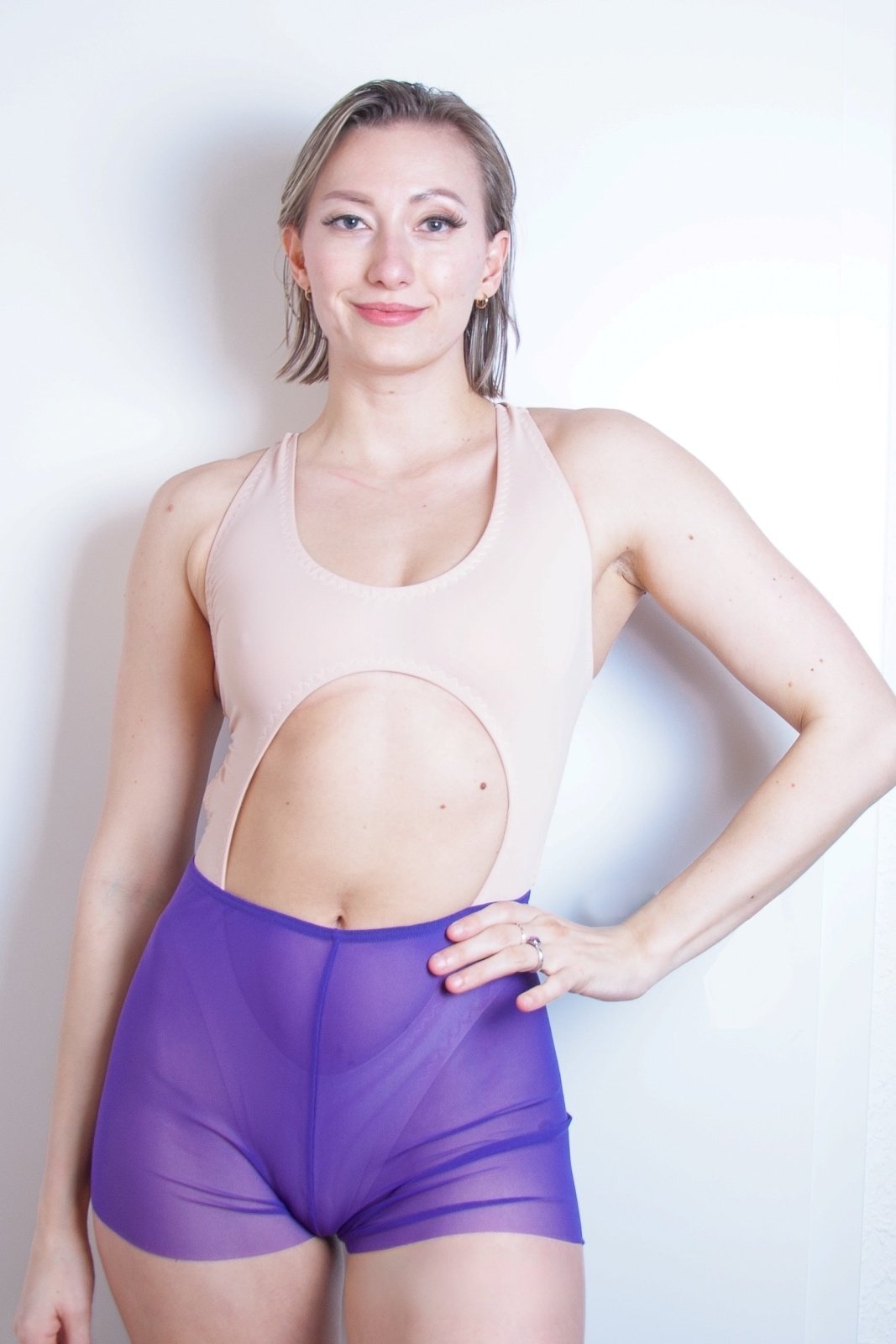
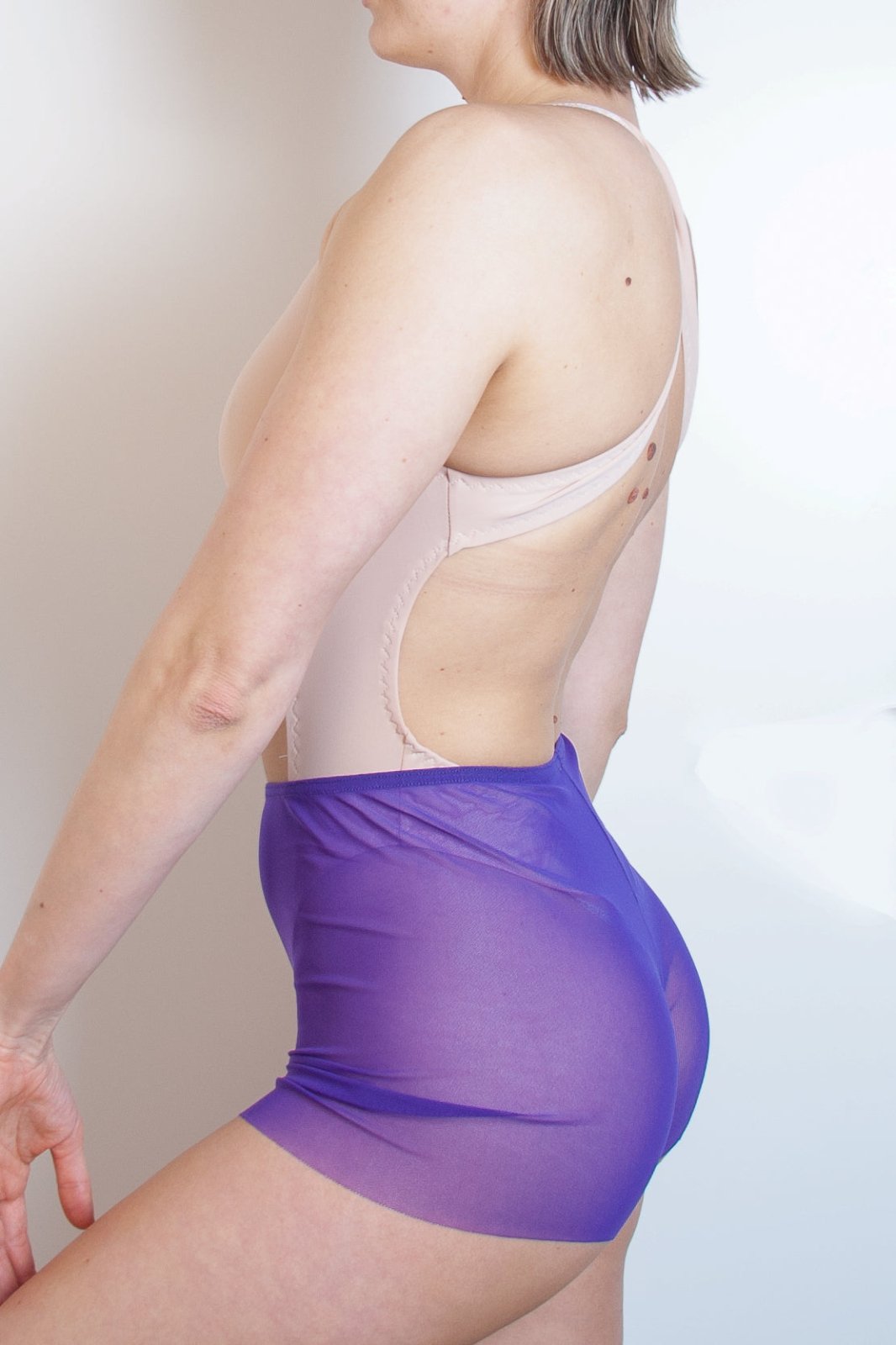
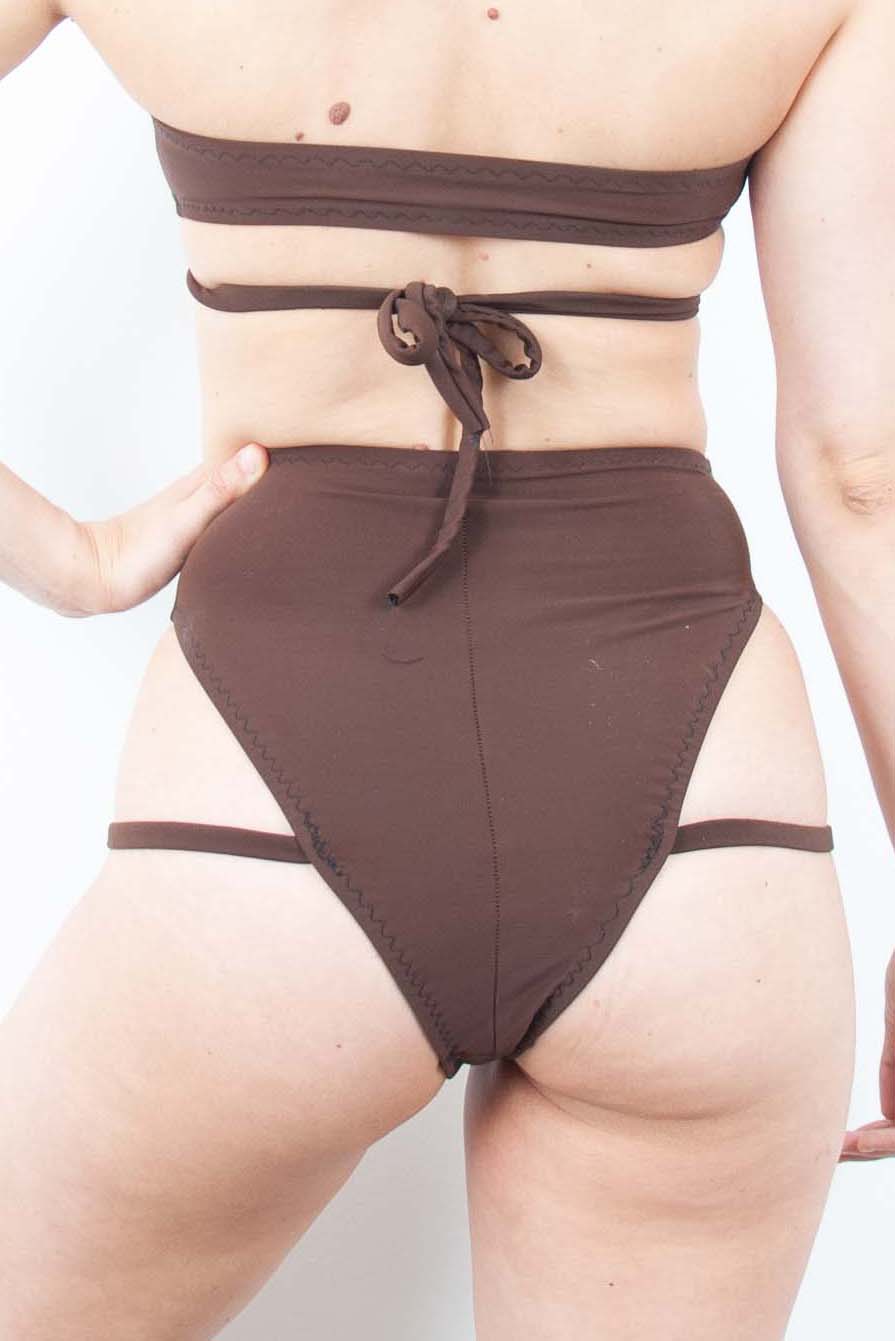
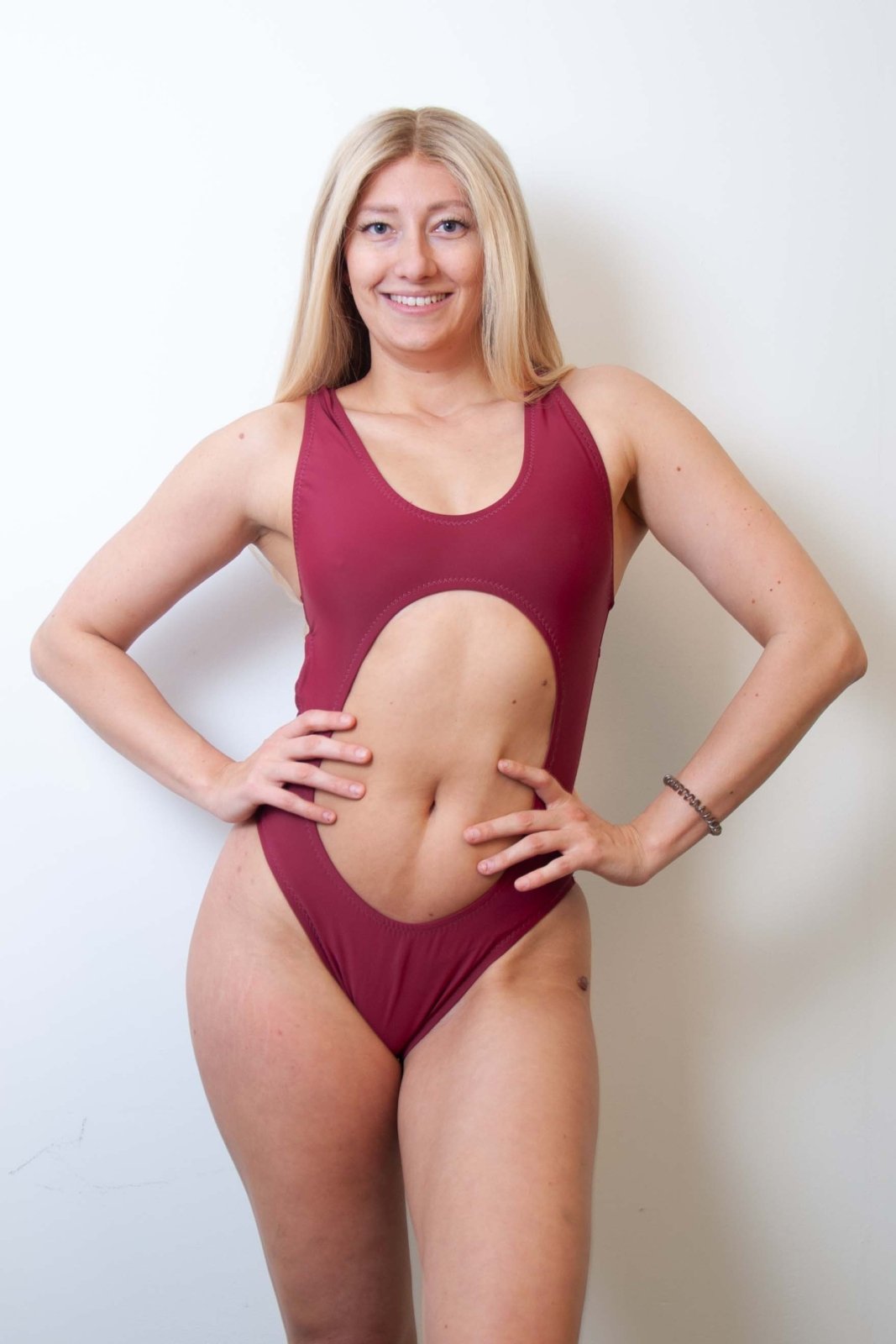
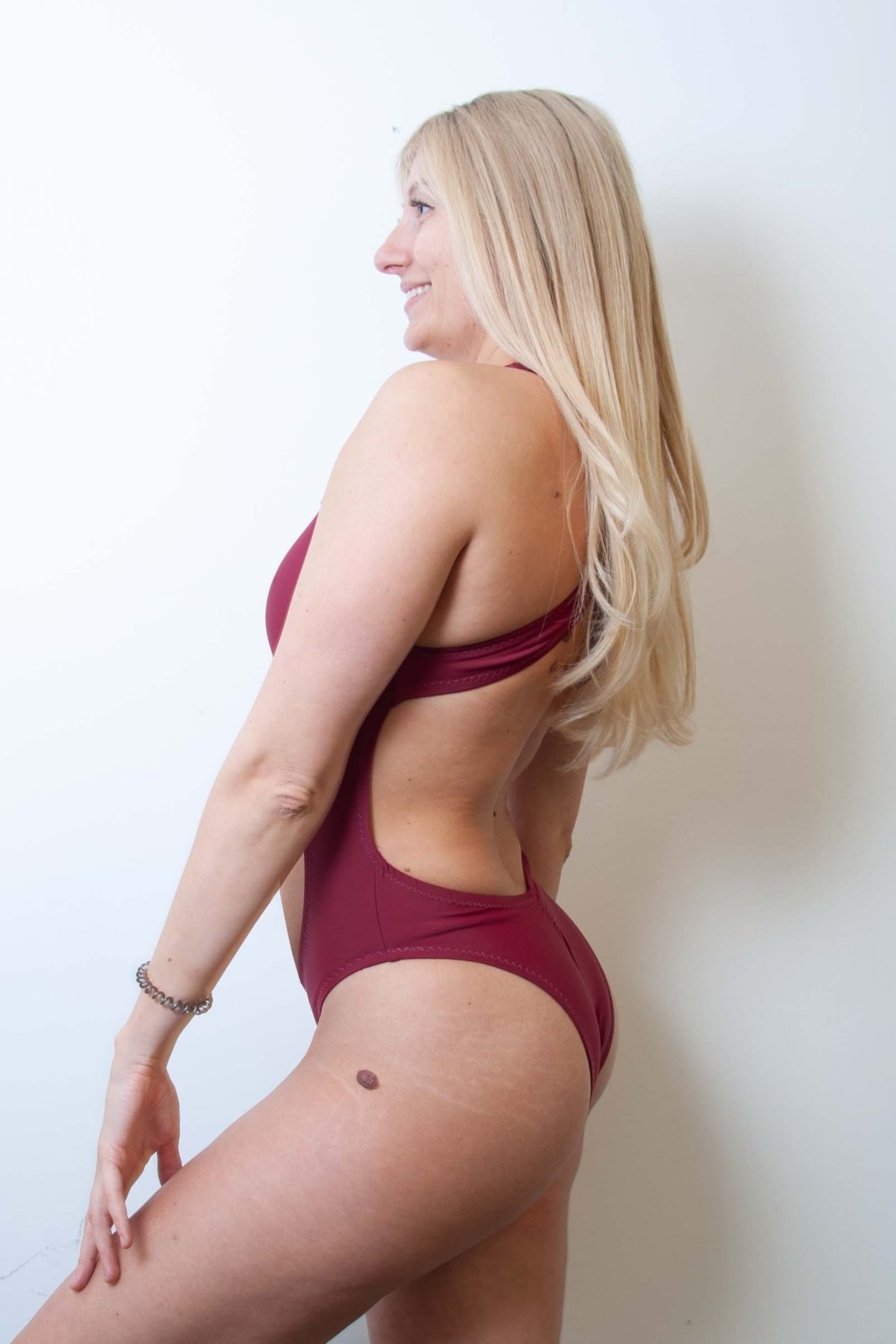
You have your pole — now you need the right clothing. Direct skin contact with the pole is essential for grip, which is why short pole dance shorts and tight-fitting tops are the basic equipment. The more skin is exposed, the better you stick to the pole. Beginners are best off starting with high-waist shorts for extra support in the core area.
For a complete outfit, bodysuits are a good option, combining skin contact in the right places with coverage. And for floorwork, knee pads are indispensable — they protect your knees during transitions and floor tricks.
Besides clothing, you need a non-slip mat under the pole and a pole cloth for cleaning. Grip aid helps with sweaty hands, especially in summer. And most importantly: structured pole dance training with the right training plan. In our training guide, you'll find plans for beginners and advanced users.
Do you also train other aerial disciplines? Then check out our clothing for aerial hoop, aerial silk, and aerial yoga — many pieces work for multiple disciplines.
- Rented apartment with concrete ceiling → Tension system (€200–€400, no drilling)
- Rented apartment with plasterboard ceiling → Freestanding pole (€300–€600)
- Property with training room → Permanently mounted (from €250 + installation)
- 45 mm diameter, stainless steel, min. 120 kg load capacity — these are the basics
- Plan at least 2x2 m space and 2.40 m ceiling height
"The pole is set up, the clothes fit — now it's just up to you. And the playlist."