


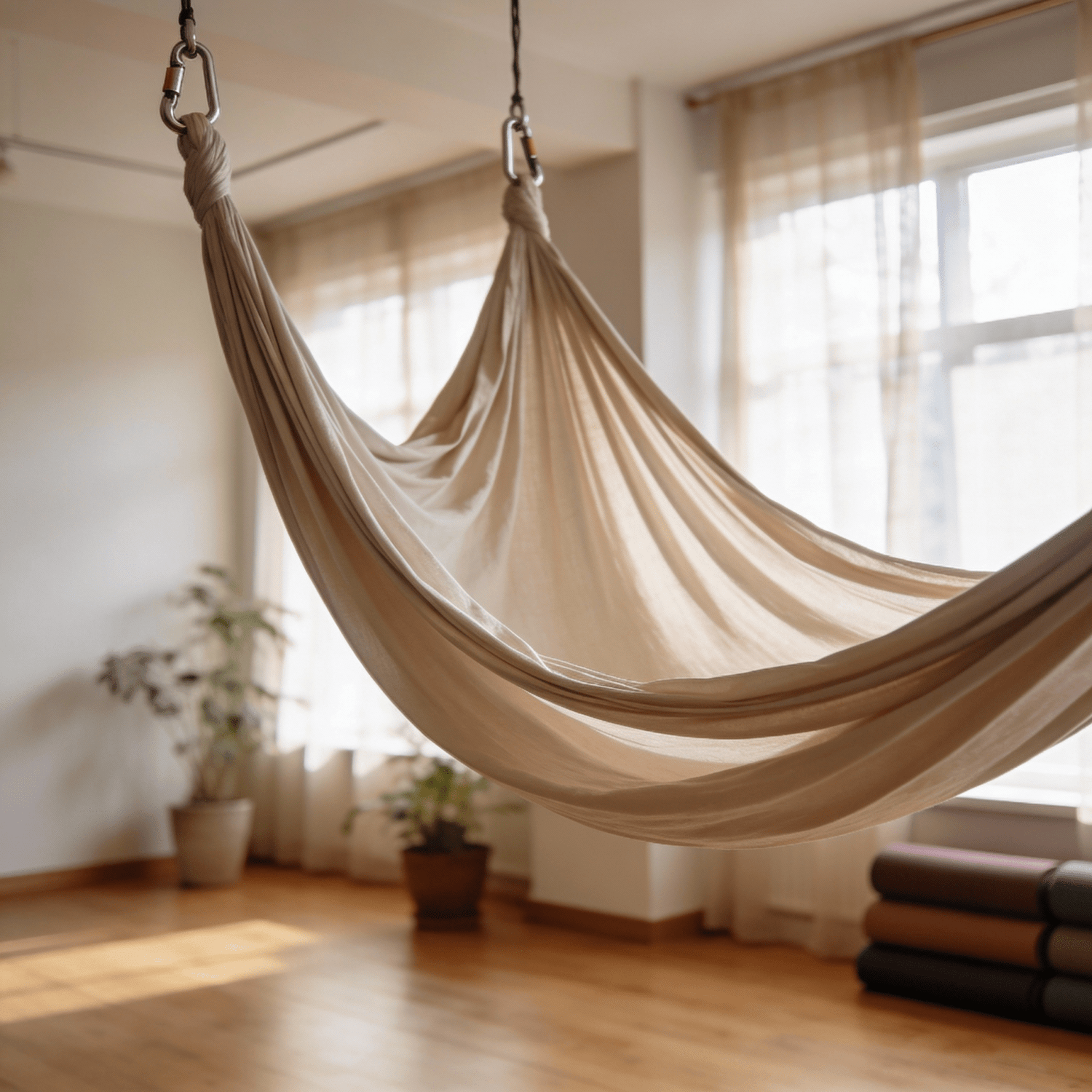

Do you want to buy an aerial yoga hammock and are facing a battle of materials like nylon, cotton, load capacities, and ceiling types? This is precisely where it's decided whether your training will be relaxing or risky – a certified hammock with correctly installed suspension is not an option, but a basic requirement for aerial yoga.
Here you'll find all the purchase criteria, step-by-step installation instructions, and an honest recommendation on what truly matters.
The most important things in brief
- Minimum load capacity: 200 kg, 300 kg recommended – only buy with TÜV or CE certification
- Two materials: nylon (easy-care, elastic) or cotton (more grip, skin-friendlier)
- Standard size: 5.5 m length, 2.8 m width – suitable for most rooms and body sizes
- Ceiling attachment only in concrete or solid wooden beams, for drywall only with toggle anchors or a freestanding frame
- Price for a good hammock: €60–150, mid-range (€60–100) usually offers the best value for money
- If in doubt: have the ceiling attachment checked or installed by a professional

Contents of this guide
Buying an Aerial Yoga Hammock: What to Look For
A low-quality hammock in aerial yoga is not just a training problem, but a safety risk. Unlike with a vertical silk or in aerial acrobatics in general, the focus in aerial yoga is on relaxation rather than acrobatics – nevertheless, the same basic rules apply to material and attachment.
Load Capacity and Certificates
The most important criterion is the load capacity: at least 200 kg, preferably 300 kg. This figure refers to static load – dynamic movements generate significantly higher forces. Look for the following proofs:
- TÜV certification: tested safety according to German standards
- CE marking: meets European safety requirements
- Documented tear resistance tests
- Multiple reinforced seams at critical suspension points
Never buy a hammock without a specified load capacity or certification. A good hammock costs between €60 and €150 – this is an investment in your safety, not a place to save money.
Workmanship and Scope of Delivery
High-quality hammocks have double or triple stitched loops, reinforced seams at the suspension points, and clean, even stitches without loose threads. A complete set should include:
- The hammock itself, usually 5–6 meters long
- Two sturdy carabiners, ideally made of steel instead of aluminum
- Ceiling mounts or eye bolts
- Assembly instructions
Material: Nylon vs. Cotton
For aerial yoga hammocks, there are two established materials: nylon and cotton. Both work, but for different priorities.
Suitable Clothing for Your Aerial Training
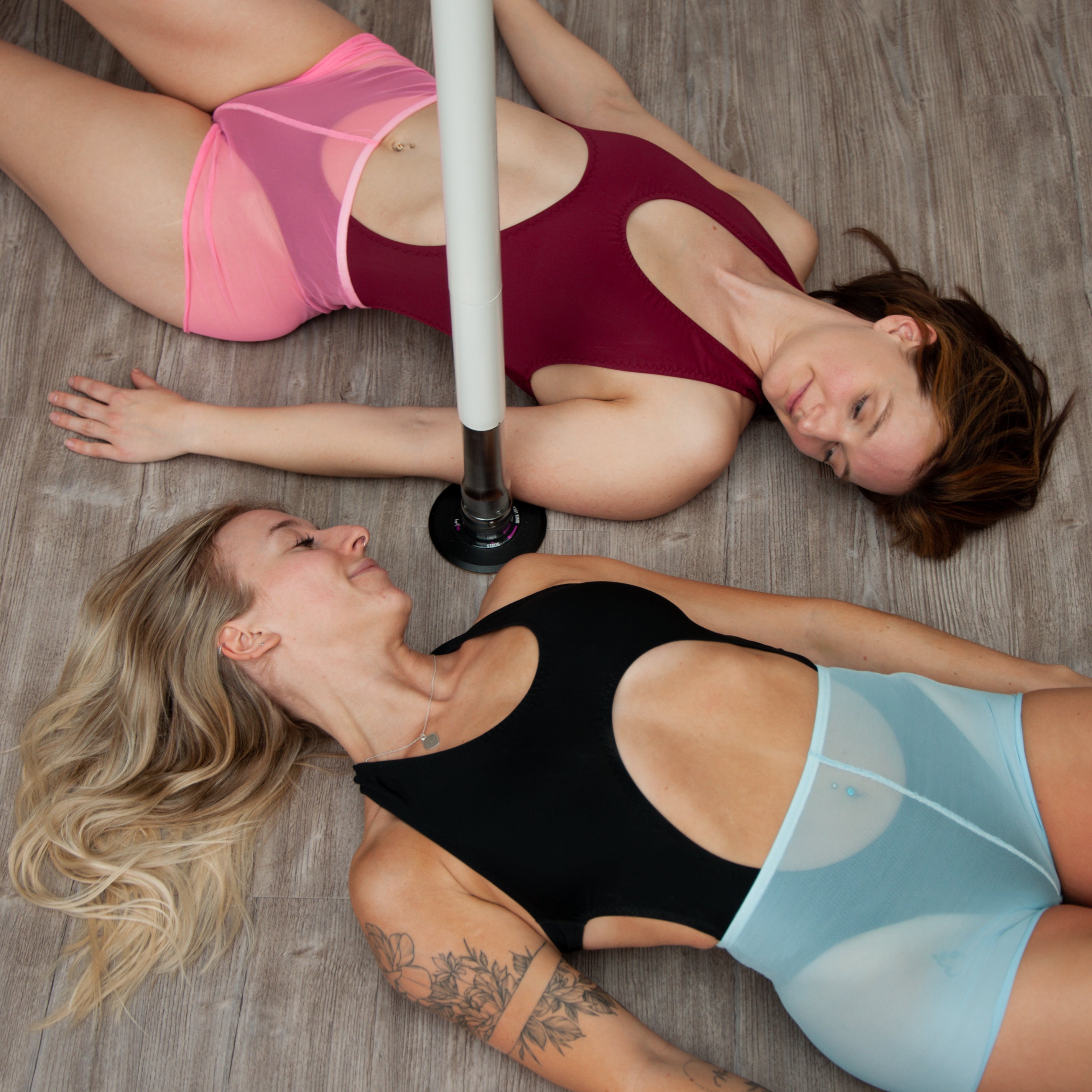
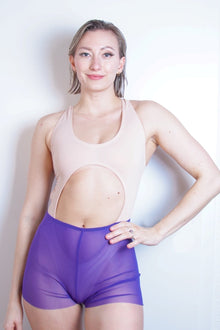
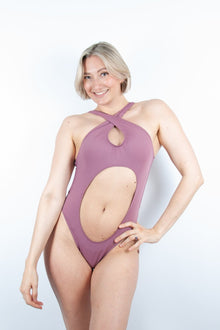
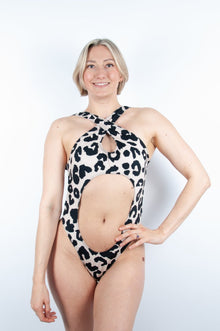
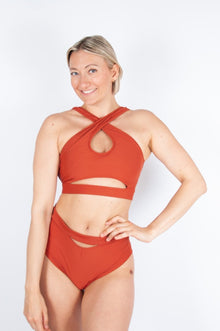
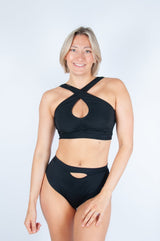
Close-fitting, flexible, no snagging in the fabric – that's how your training clothes should fit.
To the collectionThe right size for your Aerial Yoga Hammock
Most hammocks are between 5 and 6 meters long, which results in about 2.5–3 meters of usable length after hanging. 5.5 meters is standard for ceiling heights between 2.40 and 2.80 meters; 6 meters is only worthwhile for higher ceilings. The width varies between 2.5 and 3 meters – 2.8 meters is the universally applicable standard width.
A hammock 5.5 m long and 2.8 m wide fits approximately 95% of all users. Only for very high ceilings (3 m+) or for very tall people (1.85 m+) is 6 m length or 3 m width worthwhile.
Aerial Yoga Ceiling Attachment: Safety First
The ceiling attachment is the centerpiece of your setup – diligence is essential here, as incorrect installation can lead to serious injuries. Not every ceiling is suitable: concrete ceilings easily hold 300+ kg with heavy-duty anchors (M10/M12) and steel ceiling mounts, solid wooden beams carry with long wood screws (at least 80 mm) directly in the beam. A drywall ceiling alone will not hold – the load must be transferred to the underlying concrete or wood structure via extra-long toggle anchors. For a suspended ceiling, ceiling attachment is not possible; only a freestanding frame construction remains.
When in doubt: have the installation checked or directly installed by a professional. The €50–100 for this is money well spent compared to the risk of a fall.
Comparison of Attachment Systems
A ceiling plate with an eye bolt distributes the load over several anchors (load capacity 300–500 kg) and is the recommended solution. A single heavy-duty ceiling hook is easier to install but concentrates the load on one point (200–300 kg). A beam swing system requires no drilling (250–400 kg). For rented apartments or unstable ceilings, the freestanding frame (€200–400) remains the most practical solution.
Hanging Your Aerial Yoga Hammock: Step-by-Step
Before you hang your hammock, you need at least 1.5 m distance from walls in all directions, 2x2 m of clear space, no lamps or furniture within the radius, and a non-slip floor with a mat underneath.
Installing the Ceiling Attachment (Concrete Ceiling)
- Mark drill holes for the ceiling plate
- Drill with a suitable concrete drill bit (usually 10 mm)
- Insert heavy-duty anchors
- Screw the ceiling plate tightly, tightening screws crisscross
- Attach the eye bolt to the plate
- Test firmness by pulling vigorously
Hanging the Hammock
- Fold the hammock in the middle, both ends equally long
- Thread the hammock loop through the ceiling eye bolt
- Attach both carabiners, one on each side
- Secure the hammock ends to the carabiners
- Check that both sides are equally long
- Carefully test stability
For height, the rule is: bottom edge at hip height (approx. 1 m) for beginners, at chest height (1.2–1.3 m) for advanced practitioners, at least 1.5 m for inversions. You adjust the height via the carabiner position or by knotting the fabric. After installation, check: all screws tightly fastened, carabiners correctly closed, hammock hung evenly and without twists, soft mat underneath – then test with slowly increasing load.

Aerial Yoga Hammock for Children
For children, different dimensions apply: 4–5 meters in length are sufficient, 2.5 meters in width are easier to handle, and the height for beginner children should be a maximum of 1 meter above the floor.
Special caution is required: never leave children unsupervised on the hammock, use at least 10 cm thick gymnastics mats as a base, ensure a low entry from hip height, only from 6 years of age (ideally from 8), and ideally under professional guidance in a class. When introduced correctly, aerial yoga promotes body awareness, balance, and self-confidence in children – and, most importantly, it's fun. Start low: first explore playfully, sitting, swinging, before moving on to tricks.
Aerial Yoga Hammock Recommendation & Test
Our recommendation based on experience from the training community: For most, a mid-range nylon hammock (€60–100) is the best choice – solid workmanship, usually TÜV-certified, and ideal for regular training.
- Weight: 1–1.5 kg for nylon – significantly lighter often indicates inferior quality
- Material thickness: at least 40 denier for nylon
- Steel carabiners with screw lock and safety mechanism, not aluminum
- Clean, straight seams without loose threads
- No strong chemical smell when unpacking
Budget hammocks (€40–60) work for occasional users but vary in quality – check seams and certificates particularly carefully. Premium hammocks (€100–150) offer professional quality for studios and frequent trainers. You can save money on color, pattern, and accessory sets without real added value.
Care and Maintenance of Your Aerial Yoga Hammock
Wash nylon on a gentle cycle at 30 °C without fabric softener; cotton is better hand-washed. Always air dry, never tumble dry – this damages the fibers. Every 4–6 weeks of regular use is usually sufficient.
Before each training session, check your hammock for damaged seams, tears or thin spots, worn carabiners, and a secure ceiling attachment. In case of visible tears, opened seams, or bent carabiners: replace if in doubt, do not continue to use.
Ready for your training in the hammock?
Discover clothing that performs with you – on the ground and in the air.
Discover outfitsConclusion: Buying an Aerial Yoga Hammock
- At least 200 kg load capacity, TÜV or CE certification as the number one purchase criterion
- Nylon for most, cotton for sensitive skin or focus on sustainability
- Ceiling attachment only in concrete or solid wooden beams – if in doubt, consult a professional
- A good hammock costs €60–150, mid-range usually offers the best value for money
- Before each training session, briefly check seams, carabiners, and attachment
You can find more on the practice itself – exercises, class flow, and getting started – in our Aerial Yoga Basics Guide. With the right hammock and proper installation, nothing stands in the way of your training.
A safe setup is the foundation for relaxed training – take the time it needs.